
Past event
What the Midterms Could Mean for Israel
Joel Rayburn, former US Special Envoy for Syria, on what the midterms could mean for Israel: aid, Iran, Congress, campus, and whether support for Israel stays bipartisan.
Watch the Recording
Jump to a Section
- 0:00Welcome from Uri Zehavi
- 2:14What's at stake for Israel in these midterms
- 5:19The next US aid agreement with Israel
- 6:35The America First argument for less aid
- 8:49Conditions on aid
- 10:42Does it matter which party holds Congress?
- 12:04Iran: what Congress gets a say in
- 15:02If Israel has to strike Iran's nuclear program again
- 16:56Pro-Israel voters who feel pushed out
- 18:45Campus antisemitism
- 20:50Title VI and the Antisemitism Awareness Act
- 23:35Younger voters and social media
- 26:29Israel's election, seen from Washington
- 28:30Bipartisan support come January
- 29:59What America gets for $4 billion a year
- 35:15Audience questions: is Iran closer to a nuclear weapon?
- 36:44Gaza after the war, and Congress
- 37:40Qatar
- 42:21Syria and the Golan
- 43:39Saudi-Israel normalization
- 45:54Turkey and Israel
- 47:33Organized money behind hostile candidates
- 49:44Advice for anyone heading into foreign policy
- 52:19What to do after Tuesday
- 53:54The last word: the US-Israel tech alliance
- 55:40Closing
Short clips
Joel Rayburn: Will Israel stay a bipartisan issue?
Joel Rayburn: what $4 billion in aid to Israel actually buys
Joel Rayburn: show a new generation the math on Israel
Joel Rayburn: is Iran closer to a nuclear weapon?
Joel Rayburn: make antisemitism politically untenable
Joel Rayburn: the next US-Israel alliance is tech
Joel Rayburn: who is shaping how young Americans see Israel?
Speaker
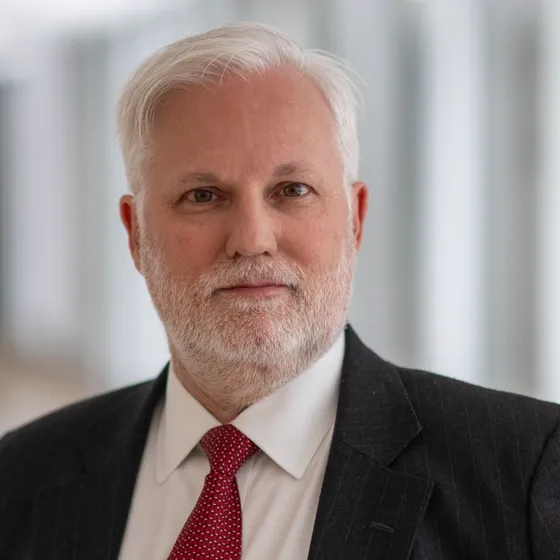
Joel Rayburn
Former US Special Envoy for Syria; Senior Fellow, Hudson Institute
Joel Rayburn is a senior fellow in Hudson Institute’s Center for Peace and Security in the Middle East. A historian of the Middle East and a former diplomat and military officer, he was the United States special envoy for Syria from July 2018 to January 2021, and from November 2020 US chief of mission for Syria. He was also deputy assistant secretary for Levant affairs, responsible for US policy on Syria, Jordan, and Lebanon, and in 2021 spent six months as special advisor for Middle East affairs to Sen. Bill Hagerty. Before the State Department, Rayburn spent 26 years as a US Army officer, commissioned from West Point in 1992, and finished as senior director for Iran, Iraq, Syria, and Lebanon on the National Security Council staff. He taught history at West Point and directed the Army’s Operation Iraqi Freedom Study Group, and he is coauthor and editor of The US Army in the Iraq War, a two-volume study published in 2018.
Photo: Hudson Institute
Joel Rubin could not join us. A technical problem with Microsoft Teams kept him out of the town hall, so Joel Rayburn took the whole hour on his own, and Uri Zehavi put the questions to him. We are grateful to him for stepping in, and we will have Rubin back for a conversation of his own.
AIC does not endorse or oppose any candidate or party. Our guests speak for themselves.
The Evening
We met on Microsoft Teams on Wednesday, October 28, 2026, from 7:30 to 8:30 PM ET. Israel had voted the day before and was still counting. Americans vote on Tuesday, November 3.
The evening was about policy, so we stayed away from particular races and candidates. The second half was your questions.
What We Heard
What Is at Stake. For decades it hardly mattered which party held the White House or Congress, because support for Israel was close to a consensus in Washington. Rayburn’s view is that this midterm helps decide whether Israel stays a bipartisan issue or becomes a partisan one. He said the drift toward partisanship has run almost full speed since October 7, and that questioning is growing on the right as well, though he put it nowhere near a plurality there.
The Aid Agreement. The ten-year Memorandum of Understanding runs out in 2028, so the next Congress shapes the one after it. Until now it has mostly paid for Israel’s purchases of American arms. Rayburn expects the next one to carry a lot more technology and intelligence sharing, because the military relationship has grown into a partnership.
Showing the Math. On the America First argument that Israel should get less, he said supporters of the alliance have taken it for granted. A new generation of voters does not, and “they need to be shown the math”: what Israel brings the United States in security, technology, and trade. In his view America gets more out of it than it puts in.
Conditions on Aid. Every country that receives American weapons already works under conditions written into US law, and he wants those enforced without a double standard. Adding a layer of political conditions on top, he said, would take us into problematic territory. He expects that debate in the next Congress, especially if the House changes hands.
Iran and Congress. The president’s war powers are broad, so Rayburn does not expect Congress to change how the campaign against Iran is run for some months. Congress’s lever is money. If the House changes hands, the defense budget, which usually takes shape around May, is where a standoff with the White House could come. He thought a vote to defund an operation unlikely in the near term.
Keeping It Bipartisan. A pro-Israel constituency lining up more and more behind one party, he said, is not good for the alliance.
Campus. Jewish students went a long time without top cover from the federal government, he said, and there has been a rebound over the last three years. Much of the harassment on campus is already illegal, so he would start by enforcing the law we have, and turn to new legislation for the loopholes, such as money that funds campaigns targeting Jewish students.
Young Americans. Younger voters in both parties are cooler on Israel than their parents. Rayburn put part of that down to concerted influence campaigns aimed at young people, with nothing like the same effort on the other side to explain the alliance. Where support stands in twenty years depends on how hard its supporters make the case, and on making it honestly, disagreements included.
What the Aid Buys. Most of the roughly $4 billion a year is foreign military financing, which Israel spends on American equipment. He compared it to Chuck E. Cheese tokens, good only in the American shop. It keeps US production lines running in lean years, puts an ally on the same equipment and training as American forces, and Israel’s military has lately helped defend the Gulf states and Jordan.
Your Questions. Asked whether Iran is closer to a nuclear weapon than two years ago, he said further away: much of its material is buried and much of its technology destroyed, though the know-how remains for as long as the regime wants a bomb. He also took questions on Gaza, on Qatar, on Syria after Assad, where he sees an opening for a different relationship with Israel, and on a Saudi normalization deal, which he hopes would pass Congress with a bipartisan supermajority so it outlasts any one administration. On Turkey and Israel, two American allies, he wants Washington working to bring them back together.
What Comes Next. He said supporters need to make antisemitism “a politically untenable position in the United States.” His advice to anyone heading into foreign policy was to study history, starting with the Cold War. He closed on technology: he expects the US-Israel tech partnership to matter even more in the future than the military one.
The Recording
A shorter cut of the evening, about 28 minutes, is the first episode of Between Us, our podcast. Listen to the episode, or find Between Us in your podcast app.
Next on Our Calendar
Guy Haran joins Israel Up Close on Thursday, November 5, at noon, to talk about Israeli wine. Bring a glass and a question.
Follow AIC
Clips from our talks, news from our missions to Israel, and what is coming up next. We post Sunday through Friday.
Give
Your gift funds the work.
Community briefings, advocacy training, humanitarian missions to Israel, and the Kosher Duck Revolution, with specifics on every tier.
- $36Double chaiThe materials behind a community briefing.Give $36
- $180Advocacy training for a group of community members.Give $180
- $750Toward licensed security at a community event.Give $750
Gifts are tax-deductible to the extent allowed by law.